
Merchants, Hippies, and Punks
As a disclaimer: These photos were taken during a visit in April 2024, so this post may not be representative of these sites today.


Merchant’s House Museum
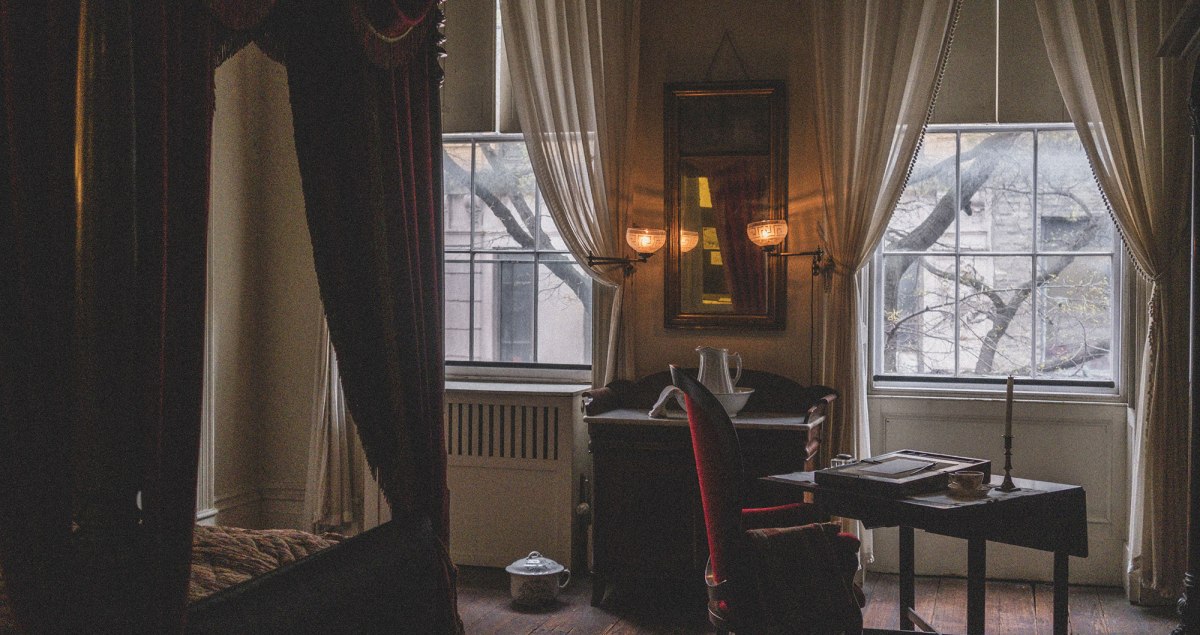
The home that today holds this stunning house museum — also known as the Old Merchant’s House and the Seabury Tredwell House — was originally built in 1831-32 as part of a building project that included a total of six identical homes. They were built by Joseph Brewster, a hatter and real estate speculator. Its first occupant was Seabury Tredwell, a merchant born in 1780 in Long Island, and whose family occupied the property for nearly a century.


They had clothing that had belonged to the family on display, which I thought was such an intimate touch. It served to really ground the idea that this was a home, and that multiple generations had occupied its halls over many decades.


While the furnishings inside the home were upgraded several times, the interior was mostly kept “as Papa wanted it” by subsequent generations, and so its original design has mostly been preserved. By the 1980s, the home was the only 19th-century home in Manhattan that still retains its original furnishings.


The design for the home has been attributed to various architects, including Menard Lafever, Joseph Brewster, and John McComb Jr. The house has 18 rooms split into five stories: the basement contained the kitchen and family room, the first story a set of formal double parlors, the second and third the family bedrooms, and the fourth contained the servants’ quarters.


After most members of the original family had passed away in 1933, a distant relation purchased the home and turned it into a museum, which opened in 1936. The building was designated a New York City Landmark in 1965, and then a National Historic Landmark in 1966. The home has undergone renovations and preservation throughout the years, with the latest efforts being carried out in 2025.


We stopped for a quick glimpse at the façade of these buildings, which served as the cover for Physical Graffiti, Led Zeppelin’s sixth album. It is located at St. Mark’s Place in the East Village, an area which was already previously historically significant. In the 1950s, the area was already home to an underground crowd, and it later became popular with hippies in the 1960s. In the 1970s, Manic Panic, the first punk store in America and a still-existing hair coloring brand, opened its doors there as well.

East Village Books
Located directly across the street from the Physical Graffiti façade, East Village Books is one of those bookstores I adore — those that are disastrously messy, nothing but you and your desire to find something amazing to read to help you discern from between the piles upon piles of books absolutely everywhere. I left there with The Fire Next Time by James Baldwin, and it was amazing.


 Gold Colored Fox