
Museo d’Arte Orientale

Museo d’Arte Orientale
Located in the 17th-century Palazzo Mazzonis, the Museum of Oriental Art holds one of the most important collections of Asian art in all of Italy.


The museum began when its collections were split from the Museo Civico d’Arte Antica and merged with contributions from other collections.


The palazzo that houses it was originally the residence of two branches of one of the major families of the Piedmontese aristocracy: the Solaro della Chiusas and the Solaro della Margaritas. The building changed hands until 1870, when it became the property of Cavaliere Paolo Mazzonis, a textile industrialist, who gave it its current name.


In the 1980s, the building became the property of the city of Turin, and was transformed between 2004-2008 by Andrea Bruno (an Italian UNESCO expert) to become the home of the Museum of Oriental Art, which opened in 2008.


Today, its collection holds nearly 2,300 objects ranging from the Neolithic period to the beginning of this past century, as well as more than 1,400 archaeological finds from pre-Islamic times in Iraq.


During my visit, the museum was hosting Liquid Frontiers and Entangled Worlds. Two thousand years of visual and material culture between the Mediterranean and East Asia, an echibition exploring “the concepts of cultural translation, transposition and interpretation” by showing objects from West, Central, and East Asia.


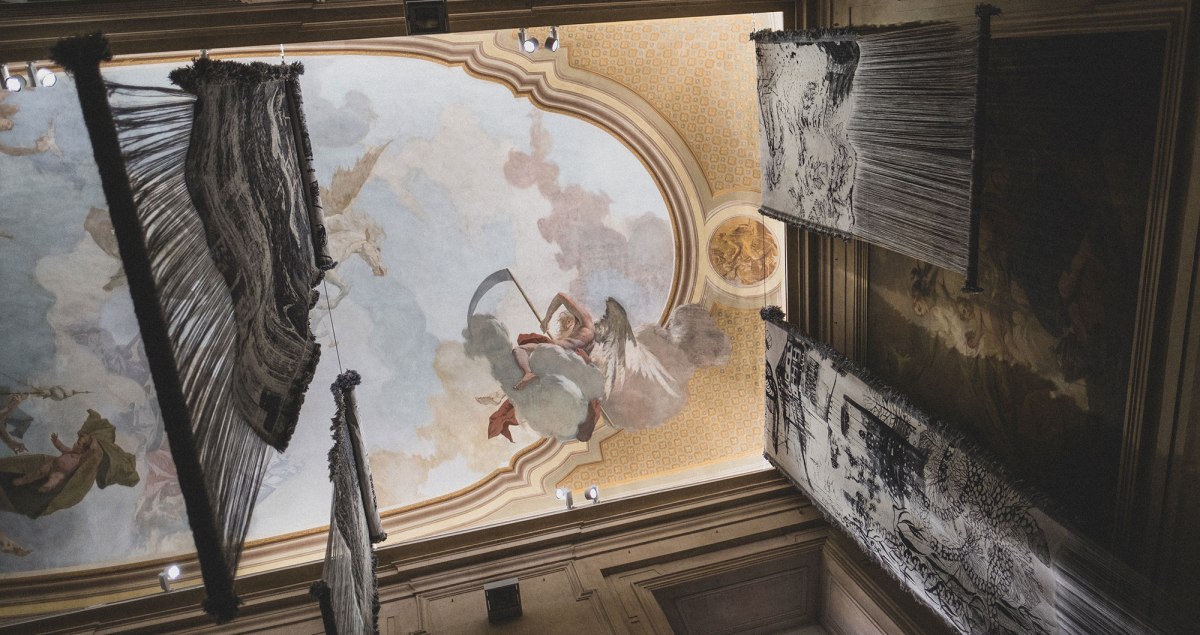
There was also an exhibition around the work of Animo Chen, a Taiwanese artist and illustrator. It included pieces from his latest editorial works The Short Elegy and Love Letter.


 Gold Colored Fox