
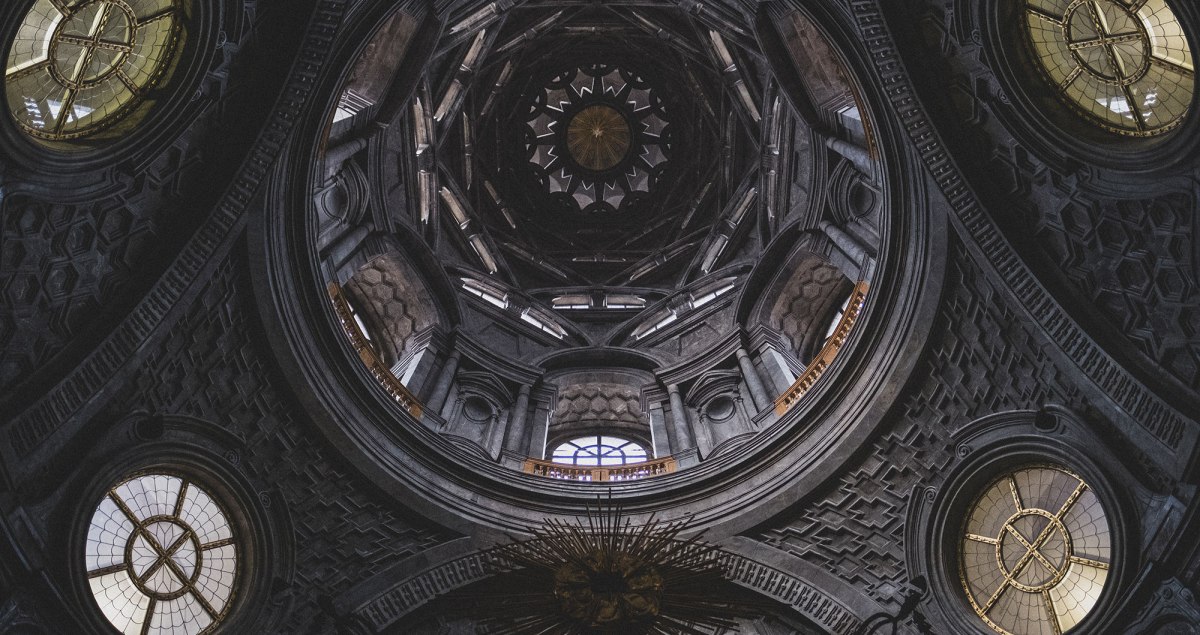
Holy Shroud! (Or, Musei Reali: Cappella della Sacra Sindone)

Cappella della Sacra Sindone
The Chapel of the Holy Shroud was built in the 17th century to house — you guessed it — the Holy Shroud. The shroud in question is a length of linen cloth that bears the apparent imprint of a man, and because this imprint is consistent with the traditional depiction of Christ, it has been historically believed to be the funerary shroud that was used to wrap up his body after the Crucifixion.


Today considered a masterpiece of Baroque architecture, the church was originally commissioned in 1610 by Carlo Emmanuele I of Savoy to preserve the shroud, which had been in the possession of the House of Savoy since 1453. The project was entrusted to Ascanio Vitozzi (who had already been responsible for the reconstruction of the Palazzo Reale) and Carlo di Castellamonte (who had worked on the Villa della Regina along Vitozzi).


Work on the building paused in 1624, when only the foundations had been laid, and then revived in 1657 under Charles Emmanuel II, thanks to the push from Cardinal Maurizio di Savoia (original owner of the Villa della Regina) for the shroud to have a permanent home. At this point, Amedeo di Castellamonte (son of Carlo) and Bernardino Quadri took over the design and construction.


Construction was again halted in 1666 due to structural problems which Quadri was unable to solve, and thus Guarino Guarini entered the picture. After taking charge of the project, he redesigned the plans for the dome, allowing it to jut out taller and give the chapel its signature external silhouette.


The dome was completed in 1679 and Guarini himself (he was a priest in addition to being an architect) celebrated its inaugural mass in 1680. He passed in 1683 before the project was fully completed, however, and was replaced first by Donato Rossetti (who passed in 1686) and finally by Antonio Bertola, who managed to reach its completion.


 Gold Colored Fox