
Oscar Wilde, Bill Nighy, The Beatles, and… Mozart?


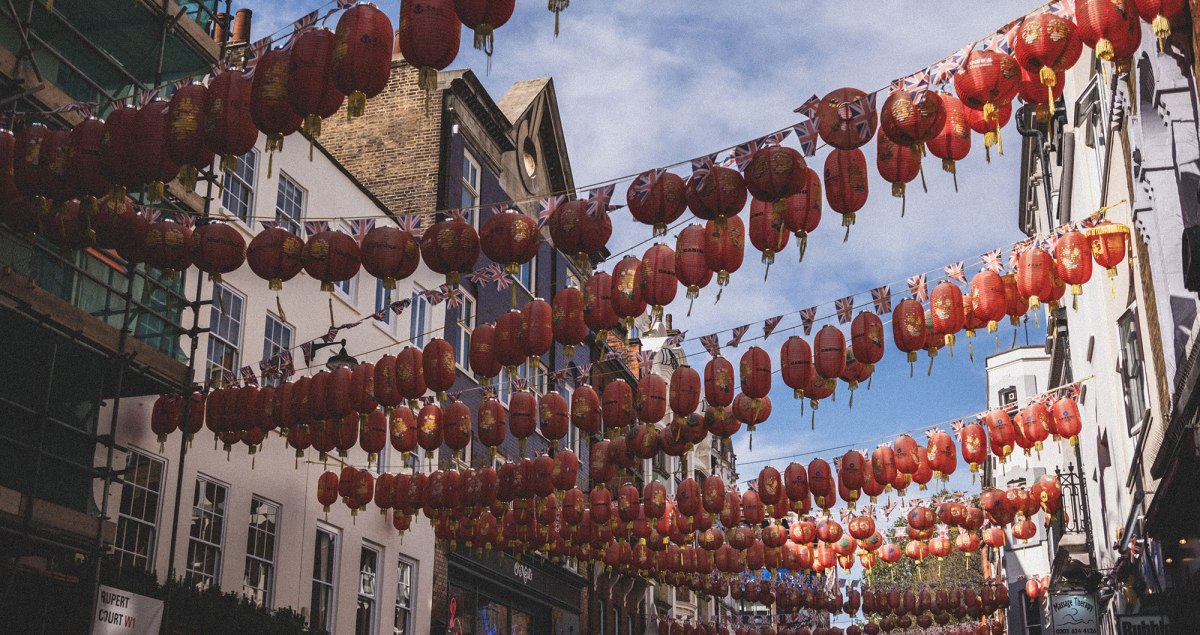
The first area in London known as “Chinatown” was originally located in the East End of the city. It was damaged extensively during the Blitz in WWII, though soon after the war ended an influx in the Chinese population led to many businesses opening in other areas of London after a slow rebuilding, and so what is now Chinatown borders Soho and the West End. The gate on Wardour Street (pictured above) was opened in 2016, made by Chinese artisans and assembled in London following the style of the Qing dynasty.


Piccadilly Circus is a road junction in the West End, famous for its bright neon lights (not pictured here, good heavens). It joins Piccadilly, Regent Street, Shaftesbury Avenue, the Haymarket, Coventry Street, and Glasshouse Street. The Shaftesbury Memorial Fountain, popularly known as Eros, is crowned by a statue of Anteros, the god of requited love (and apparently the avenger of unrequited love, which doesn’t sound quite so nice). It was originally erected in 1892-93 in the center of the circus to commemorate the work of Anthony Ashley Cooper, 7th Earl of Shaftesbury, which included replacing child labor with education.


Hatchards
This lovely bookshop was founded in 1797 by John Hatchard, and so claims to be the oldest in the United Kingdom. It moved once, but has been at the same location on Piccadilly since 1801.


It holds three royal warrants (which means they are patronized by the royal family), it was Oscar Wilde’s favorite bookshop, and I happened to sight Bill Nighy while I perused its shelves (!).


If you’re a fan of The Beatles, you may know that their final performance took place on the rooftop of a building, more specifically the headquarters of the Apple Corps, founded by them. This happens to be that building. The Beatles played a 42-minute set before the police arrived and ordered them to stop making a ruckus (can you imagine asking The Beatles to stop making noise??), with Get Back being the final song.


Cecil Court has been known as Booksellers’ Row since the 1930s, and with good reason. The tiny street is lined with Victorian shop fronts selling books, antiques, posters, and all sorts of lovely, paper-related goods.


The street has existed in some capacity since the 17th century, and part of it burned to the ground in 1735 in what was likely arson by a tenant who ran a brandy shop and brothel on this street. Cecil Court was also apparently home to Mozart for about four months while he toured Europe at the age of eight.


 Gold Colored Fox