
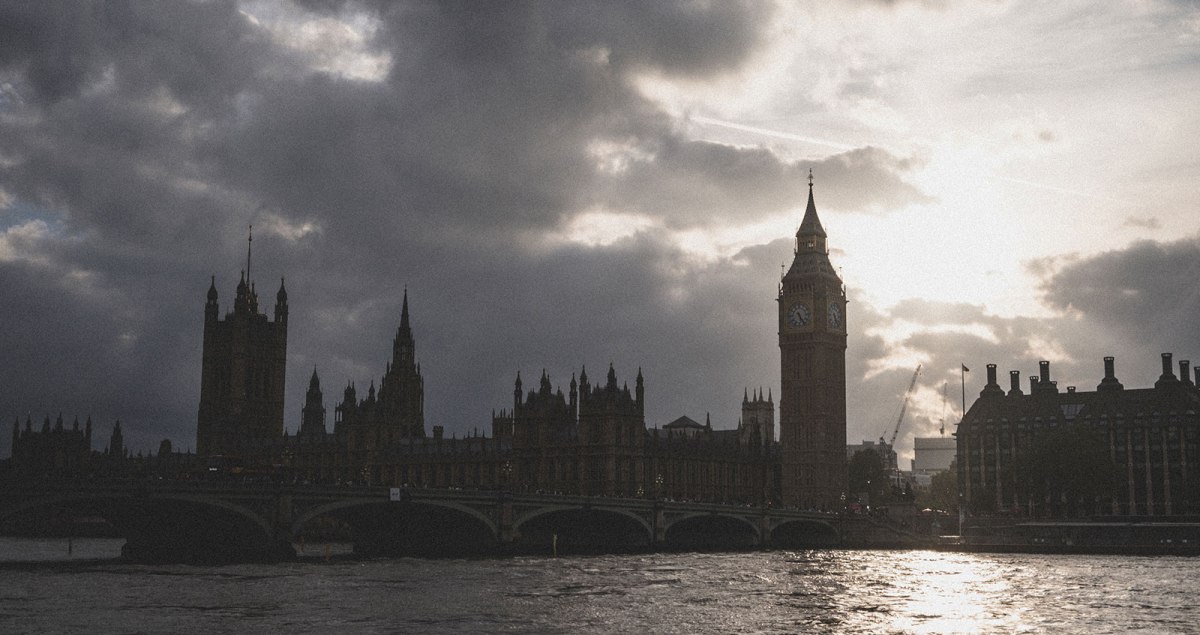
An abbey, a palace, and a bridge walk into a pub

Westminster Abbey
While I did not actively visit Westminster Abbey (going inside will set you back a pretty penny — a whooping £29), it’s a building difficult to miss if you visit the Westminster area (and you certainly won’t miss the lines leading into it).


Historians agree that the abbey’s origins begin in the 11th century, with a monastery dedicated to Saint Peter on the site, though its founding patron is a bit more obscure. Edward the Confessor began to rebuild the existing church in the 11th century to provide himself with a royal burial church, creating in the process the first church in England with a cruciform plan. The church was consecrated in December of 1065, a week before Edward’s death. The first documented coronation is that of William the Conqueror, who invaded England after Edward’s death, later that year.

The church was given the status of Royal Peculiar, first in the 12th century, and then finally by Elizabeth I in 1560, which meant it did not answer to the diocese to which it belongs, but only to the head of the Church of England itself (the sovereign).

The north rose window was designed by James Thornhill and made by Joshua Price in 1722, depicting Christ and the apostles (sans Judas Iscariot), the Four Evangelists, and the Bible.

In the 17th century, Christopher Wren (responsible for building 52 new churches after the Great Fire of London, including St Paul’s Cathedral) became the first Surveyor of the Fabric (which is the coolest job title ever) for the abbey, which meant he was responsible for its upkeep and maintenance, as well as that of its surrounding buildings. He also became responsible for the construction of the abbey’s two western towers, built in a Gothic-Baroque style over the next two hundred years.

Since its construction, the abbey has been the site of the coronation of 40 English and British monarchs, the burial site for 18 English, Scottish, and British monarchs (as well as literally over 3,000 other people), and the location for 16 royal weddings. The combined locations of Westminster Abbey, St Margaret’s Church, and the Palace of Westminster were declared a UNESCO World Heritage Site in 1987.

St Margaret’s Church
Sitting on the grounds of Westminster Abbey, the Church of St Margaret is dedicated to Margaret of Antioch, whose coolest exploit (in my opinion) is that of being swallowed by Satan in the shape of a dragon and somehow making it out alive (though she was eventually decapitated). The church was built in the time of the Benedictine monastery, so that the lay people who lived in the area would have a place in which to worship.

The current church was rebuilt in the 15th-16th centuries, and consecrated in 1563 — it is believed the last Catholic church to be so in London before the Reformation. It became the parish church of the Palace of Westminster in 1614.

Get ready for a wild story: in the 19th century, while preparing renovations, workers found several doors overlaid with… skin. Victorian historians theorized that it was the skin of William the Sacrist, who had pulled a major heist in 1303 and stolen the modern equivalent of roughly $100 million from Edward I and was thus flayed alive, with his skin used to make, yep, royal doors. It was later discovered that the skin was bovine, however, and not human. Humans are barbaric, but not towards each other.


Palace of Westminster
The Palace of Westminster is commonly known as the Houses of Parliament, after the House of Commons and the House of Lords, the two legislative bodies which occupy the building. The site was originally constructed as a royal palace in the 11th century, primarily to oversee the construction of the Westminster Abbey.

The building was largely destroyed in 1834 due to a fire, and the only original remaining part of the Palace is Westminster Hall, which was built by King William II, son of William the Conqueror. During the subsequent reconstruction, King William IV offered the nearly-complete Buckingham Palace to Parliament as an interim meeting place — as he disliked it immensely — but it was considered unfit for parliamentary use, and thus rejected.

Reconstruction began soon after and was led by the architect Charles Barry in close collaboration with Augustus Pugin, who was an expert of Gothic Revival, and was thus able to provide more fitting finishing touches to the design. Construction was officially completed in 1860.

Victoria Tower
The Palace of Westminster boasts three towers, the tallest of which is Victoria Tower. It was built as a fireproof repository for books and documents as a response to the fire of 1834, in which almost all the records kept by the House of Commons were destroyed. Its first stone was laid out by Queen Victoria in 1843, but it was not until 1897 that the tower was named after her to celebrate her Diamond Jubilee (originally, it was known as the King’s Tower).

Elizabeth Tower
Commonly known as “Big Ben,” this name originally applied to the largest of the five bells that power the clock. The tower itself was called the Clock Tower until 2012, when it was renamed Elizabeth Tower to celebrate the Diamond Jubilee of Queen Elizabeth II.


It was designed by Augustus Pugin and completed in 1859, after his death. The clock’s original mechanism is preserved, which made it the most accurate four-faced striking and chiming clock in the world at the time of its completion. This mechanism was designed by Edmund Beckett Denison and George Airy, the latter of whom served as the Astronomer Royal, and constructed by Edward John Dent and Frederick Dent.

The tower is undoubtedly the symbol of the city of London, and an unbelievably stunning structure at that. Pictures don’t really do justice to the amount of detailing present on its façades or on the crowning spire, which is covered in hundreds of cast iron rooftiles, or how all that gilding glints in the sunlight (even on such a gloomy day!).


Westminster Bridge
The first Westminster Bridge was built in 1739-1750 under the supervision of the Swiss engineer Charles Labelye. Its construction kickstarted a rush of bridge building over the next few decades, when Blackfriars Bridge, Kew Bridge, Battersea Bridge, and Richmond Bridge were raised.

The bridge assisted in the development of South London, as suddenly it was easier and more convenient to travel there from other, more populated areas of the city. In the 19th century, the bridge was reconstructed into its current image by Thomas Page, and opened in 1862. Its Gothic detailing was done by Charles Barry, architect of the Palace.


 Gold Colored Fox